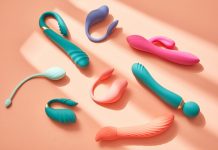
My friend Sarah once told me she’d rather use a manual can opener for the rest of her life than touch another vibrator. Not because she’s prudish or anti-pleasure – she owns more lingerie than Victoria’s Secret and talks about sex more openly than most people discuss the weather. She just genuinely, viscerally hates the things.
Turns out, Sarah’s not alone. While vibrators get all the hype as the ultimate pleasure tool, there’s a surprisingly large group of people who can’t stand them. And it’s not what you’d think.
The Sensory Overload Factor
Here’s what nobody talks about: vibrators can feel like getting your pleasure zones attacked by an aggressive power tool. For people with sensitive nervous systems, that buzzing sensation doesn’t feel good – it feels overwhelming, numbing, or downright irritating.
I’ve talked to women who describe vibrator use as “too much, too fast, too intense.” It’s like the difference between someone gently stroking your arm versus someone rapidly tapping it with their fingertips for ten minutes straight. Same basic motion, completely different experience.
Some people’s bodies just process vibration differently. What feels like a gentle massage to one person feels like an annoying lawn mower to another. There’s no right or wrong here – it’s pure biology.
The Control Issue You Don’t Expect
Then there’s the psychological side that catches people off guard. Vibrators do their own thing at their own pace. You can’t make them go softer or harder in the moment – you get what the motor gives you.
For people who need to feel completely in control of their pleasure experience, this mechanical predictability becomes a roadblock instead of a feature. They want to be able to adjust pressure, speed, and technique in real-time based on what their body’s telling them right now.
It’s the same reason some people hate cruise control while driving. Sure, it works perfectly fine, but they want their foot on the pedal making every tiny adjustment themselves.
The Disconnection Dilemma
Here’s where it gets really interesting psychologically. Some people find vibrators create too much distance between them and their own pleasure. Instead of feeling connected to their body and what it’s experiencing, they feel like they’re operating a machine.
One woman explained it to me like this: “It’s like the difference between playing piano and pressing play on Spotify. Both make music, but one feels like I’m creating something and the other feels like I’m just consuming it.”
This isn’t about being anti-technology or preferring “natural” experiences. It’s about needing that direct, unmediated connection between intention and sensation. Some brains are wired to find pleasure in the process itself, not just the end result.
Cultural Baggage Nobody Admits
Let’s be honest about the elephant in the room. Despite all our sex-positive progress, vibrators still carry cultural weight that affects how people relate to them psychologically.
Some people unconsciously associate vibrators with the idea that their natural body isn’t “enough” – that they need mechanical assistance to achieve what should come naturally. Even when they rationally know that’s nonsense, the emotional reaction can still be there.
Others grew up with messages that “real” pleasure should only come from partners, not objects. Again, they might intellectually reject this idea completely, but emotional responses don’t always follow logical thinking.
These cultural scripts can create an underlying tension that makes the whole experience feel wrong or artificial, even when everything is working exactly as intended.
The Texture and Material Thing
This one’s practical but surprisingly important. A lot of people who hate vibrators aren’t actually responding to the vibration – they’re responding to how the thing feels against their skin.
Silicone, even high-quality medical-grade silicone, has a specific texture. Some people find it too smooth, too artificial, or just not pleasant to touch. It’s like how some people can’t stand the feel of velvet or microfiber – it’s not logical, it’s just how their sensory system processes that particular texture.
Plus, vibrators tend to be room temperature when you start, which can feel jarring and clinical. Human touch comes with natural warmth and subtle texture variations that many people need to feel comfortable and aroused.
Finding What Actually Works
The good news? Hating vibrators doesn’t mean you’re stuck with fewer options. It often means you just need to get more creative and intentional about what actually works for your specific body and psychology.
Manual techniques give you complete control over pressure, speed, and rhythm. Toys without motors – like curved glass or silicone pieces – provide interesting sensations without the mechanical buzzing. Some people discover they prefer pulsating water pressure, textured surfaces, or even just really good mental stimulation.
The key is letting go of the idea that vibrators are somehow the “right” or “best” way to experience pleasure. They’re one option in a huge toolkit, and if they don’t work for you, that’s valuable information about your preferences, not a personal failing.
Your body’s responses are giving you data about what it needs and wants. Listen to that instead of fighting it. Some people need vibration to feel anything at all. Others need complete stillness and gentle pressure. Both are completely normal, and both deserve respect.